
Robert E. Lee remains one of the most studied figures of the American Civil War. Born on January 19, 1807, at Stratford Hall in Virginia, Lee came from a prominent Virginia family, but his father’s financial troubles forced the family to leave Stratford Hall during Lee’s childhood. He later grew up in Alexandria, Virginia, and in 1831 married Mary Anna Randolph Custis, whose family owned Arlington House.
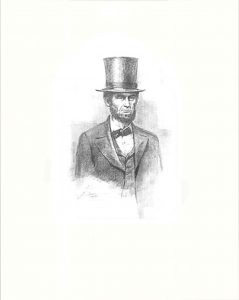
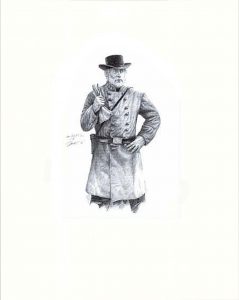
Dale Gallon’s “Lee Sketch” offers a portrait-style introduction to Lee before the page moves into the major Civil War moments represented in Dale’s paintings. The open edition black and white pencil sketch works well near the top of the page as a simple linked image leading visitors to the product.
Lee graduated second in his class from the United States Military Academy at West Point in 1829 and served more than three decades in the U.S. Army. Before the Civil War, his service included engineering work, recognition during the Mexican-American War, three years as superintendent of West Point, and command of the U.S. Marines sent to suppress John Brown’s raid at Harpers Ferry in 1859.
Any honest history of Lee has to hold several facts together. He was a respected U.S. Army officer, a Confederate commander, a Virginian who opposed secession but chose to resign from the U.S. Army after Virginia seceded, and a postwar figure whose memory became deeply contested. The National Park Service notes that the Civil War grew out of many tensions in American life, “most importantly” the role of slavery within American society.
A complicated American figure
Robert E. Lee served more than 30 years in the U.S. Army before resigning in April 1861 and joining Virginia after the state seceded from the Union.
Lee Leaves the United States Army
When the secession crisis came in 1860 and 1861, Lee did not begin as a public advocate for disunion. The National Park Service records that Lee opposed secession and hoped the Union could be preserved. But after Virginia voted to secede, Lee concluded that he could not take part in military action against his home state. On April 20, 1861, he resigned from the U.S. Army.
Just days earlier, Lee had been asked whether he would take command of the army being gathered in Washington. He refused. According to the National Park Service, Lee later wrote that although he opposed secession and “deprecated war,” he could not take part in what he regarded as an invasion of the Southern states.
Lee’s decision changed the course of his life. Within weeks, he accepted command in Virginia’s forces. In 1862, after General Joseph E. Johnston was wounded outside Richmond, Confederate president Jefferson Davis placed Lee in command of the army defending Richmond. Lee renamed it the Army of Northern Virginia and commanded it until the final days of the war.
The Road to Gettysburg
By 1863, Lee had built a reputation as the Confederacy’s most successful field commander in the Eastern Theater. He had won major victories in Virginia, including the Seven Days Battles, Fredericksburg, and Chancellorsville, often against larger Union forces. But the Confederacy faced growing pressure across multiple fronts, and Lee believed another movement north might relieve war-torn Virginia, gather supplies, threaten Northern morale, and perhaps influence the political will to continue the war.
After Chancellorsville, Lee moved the Army of Northern Virginia into Pennsylvania. The American Battlefield Trust notes that Lee began moving north on June 3, 1863, with the hope of winning a victory north of the Mason-Dixon line and forcing a negotiated end to the fighting.
The campaign did not unfold exactly as Lee planned. His army was spread across Pennsylvania, and Union forces under newly appointed commander George G. Meade moved to keep the Army of the Potomac between Lee and Washington, D.C. Lee ordered his scattered forces to concentrate near Cashtown, just west of Gettysburg.
Serious Work Ahead — July 1, 1863
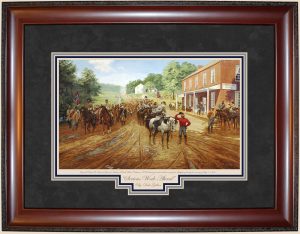
Dale Gallon’s “Serious Work Ahead,” released in 1991, illustrates General Robert E. Lee and General A. P. Hill at Cashtown, Pennsylvania, on the morning of July 1, 1863, as sounds of battle came from Gettysburg.
That morning, a reconnaissance movement by Confederate forces under Henry Heth, part of A. P. Hill’s Third Corps, collided with Union cavalry west of Gettysburg. The American Battlefield Trust explains that Lee had ordered his army to concentrate around Cashtown and had instructed his commanders to avoid a general engagement until the army was concentrated. Even so, the encounter outside Gettysburg quickly grew into a major battle.
Union cavalry under John Buford delayed the Confederate advance long enough for Union infantry to arrive. Fighting spread along the Chambersburg Pike, through McPherson’s Ridge, the railroad cut, and the ground west and north of town. By late afternoon, Union forces were driven back through Gettysburg to Cemetery Hill.
Dale’s painting captures the uncertainty of the opening day. At Cashtown, Lee was not yet looking at the full battlefield picture that history now lays out neatly. He was hearing the beginning of a fight that would become one of the largest and most consequential battles of the Civil War.
Gettysburg began unexpectedly
Lee had ordered his army to concentrate near Cashtown and avoid a general engagement until ready, but fighting west of Gettysburg rapidly expanded on July 1, 1863.
Tomorrow We Must Attack
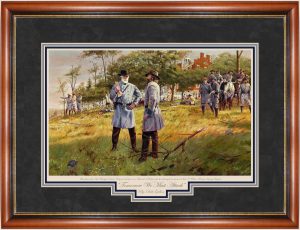
Later on July 1, Lee had a different problem. Confederate forces had won ground and pushed Union troops out of Gettysburg, but the Union army now held strong defensive positions on high ground south of town. During the night, reinforcements arrived for both armies.
Dale Gallon’s “Tomorrow We Must Attack,” released in 1993, illustrates Lee and Lieutenant General James Longstreet on the grounds of the Lutheran Seminary west of Gettysburg late on July 1. The artwork presents the moment as Lee listens to Longstreet’s argument for moving away from Gettysburg rather than attacking the Union position directly.
The historical debate around Lee and Longstreet at Gettysburg has been argued for generations. What is clear is that Lee chose to continue the battle. On July 2, he attempted to strike both Union flanks, with attacks involving Longstreet’s and Hill’s divisions on the Union left near the Peach Orchard, Wheatfield, Devil’s Den, and the Round Tops, while Ewell’s divisions attacked the Union right near Culp’s Hill and East Cemetery Hill.
Those attacks produced some of the most famous fighting of the war, but they did not break the Union line. By the end of July 2, Union forces still held Little Round Top, Cemetery Ridge, Cemetery Hill, and Culp’s Hill. Lee’s army had inflicted damage, but the decisive result he wanted had not come.
Pickett’s Charge and the Failure at Gettysburg
On July 3, Lee turned to the Union center on Cemetery Ridge. After a major artillery bombardment, Confederate infantry advanced across open ground in what became known as Pickett’s Charge, or the Pickett-Pettigrew assault. The National Park Service notes that the attack briefly pierced the Union line but was driven back with severe casualties.
The attack was disastrous for the Confederates. Another National Park Service article notes that Lee ordered Longstreet to prepare Pickett’s troops for the assault, that Longstreet had reservations, and that casualties in the charge approached 60 percent. The failure forced Lee to abandon the attempt to reach Washington by way of Pennsylvania.
Gettysburg was not the end of the war, but it was a major turning point. Lee’s army remained dangerous, and the fighting would continue for nearly two more years. But the defeat in Pennsylvania ended Lee’s second invasion of the North and badly weakened the Army of Northern Virginia.
Sad Day to Us — July 4, 1863
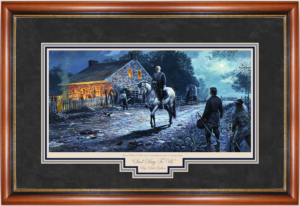
Dale Gallon’s “Sad Day to Us,” released in 2000, moves the story into the exhausted aftermath of Gettysburg. The panoramic work illustrates Lee returning to headquarters around 1:00 a.m. on July 4, 1863, after a weary day of battle.
The title fits the moment. Gettysburg had cost Lee dearly. The National Park Service estimates total casualties at Gettysburg at about 51,000, with roughly 28,000 Confederate casualties and 23,000 Union casualties. On July 4, Lee began withdrawing his army toward Williamsport on the Potomac River, with a train of wounded stretching more than fourteen miles.
This is where Dale’s timeline gives the page its emotional center. “Serious Work Ahead” shows Lee as the battle begins. “Tomorrow We Must Attack” shows Lee still pressing forward. “Sad Day to Us” shows the cost of those decisions after the great assault failed and the Army of Northern Virginia began the long retreat home.
Gettysburg’s enormous cost
The Battle of Gettysburg produced roughly 51,000 casualties and ended with Lee withdrawing the Army of Northern Virginia toward the Potomac River.
From Gettysburg to the Final Campaign
After Gettysburg, Lee continued to command the Army of Northern Virginia through a grinding war of attrition. In 1864, Ulysses S. Grant came east as general-in-chief of the Union armies and began applying constant pressure against Lee. The Overland Campaign, the battles around Richmond and Petersburg, and the long siege of Petersburg gradually wore down Confederate options.
The National Park Service’s Petersburg biography of Lee notes that he used the defensive advantages of trench warfare and the ability to shift troops quickly along his lines to hold Petersburg and Richmond for nine and a half months despite increasing odds against his army. But by April 1865, the Confederate position had collapsed. After the Union victory at Five Forks on April 1, Lee’s lines broke the next day.
Lee evacuated Petersburg and Richmond and tried to move west, hoping to obtain supplies and possibly join Confederate forces under Joseph E. Johnston in North Carolina. Instead, Union forces pursued aggressively and cut off roads, supplies, and escape routes.
For the Cause — April 6, 1865
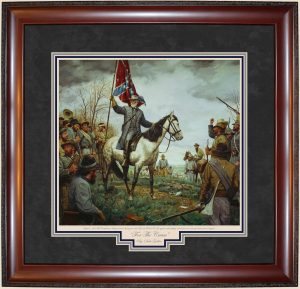
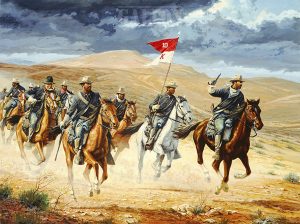
Dale Gallon’s “For the Cause,” released in 1986, illustrates Lee on April 6, 1865, as the Confederate army neared disintegration during the final retreat toward Appomattox. The work shows Lee appearing with a battle flag and making a personal appeal to his men.
The historical setting is the Appomattox Campaign and the disaster at Sailor’s Creek. The American Battlefield Trust describes Sailor’s Creek as a devastating defeat in which Union soldiers captured roughly one-fourth of Lee’s army during three separate engagements on April 6, 1865. Three days later, Lee surrendered the Army of Northern Virginia at Appomattox Court House.
At Sailor’s Creek, Lee’s army was breaking apart. The American Battlefield Trust records that Lee, watching from a distant knoll, was heard to exclaim, “My God! Has the army dissolved?” The battle cost him thousands of men, many captured, including several Confederate generals.
Placed after the Gettysburg works, “For the Cause” shows a very different Lee. This is no longer the commander invading Pennsylvania and attempting to force a decisive victory. This is Lee in the final week of the war, trying to hold together an army that was running out of food, roads, time, and hope.
Appomattox and Surrender
By April 9, 1865, Lee’s army was cornered near Appomattox Court House, Virginia. The National Park Service explains that as fighting ended that morning, Lee sent a final note to Grant asking for a meeting to discuss the surrender of the Army of Northern Virginia. The meeting took place in the parlor of Wilmer McLean’s house.
The surrender of the Army of Northern Virginia did not instantly end every Confederate army in the field, but it effectively signaled the end of the nation’s largest war. The National Park Service describes Appomattox as the place where the surrender of Lee’s army on April 9, 1865, raised the central questions of peace, reunion, and emancipation after four years of war.
Lee refused calls to continue the conflict as guerrilla warfare. His farewell order to the Army of Northern Virginia argued that the army had been compelled to yield to “overwhelming numbers and resources,” language that later shaped how many Confederate veterans remembered the war.
Lee After the War
After the war, Lee became president of Washington College in Lexington, Virginia. Publicly, he promoted restoration of peace and reunion, but his postwar views on race and Reconstruction remained limited by the racial assumptions of his time and class. The National Park Service notes that Lee opposed Black suffrage and privately expressed frustration with Reconstruction policies protecting African American voting rights.
Lee died in 1870 in Lexington. In the years after his death, memorial groups elevated him as a symbol of Southern military skill, personal honor, and reconciliation. That memory, however, often softened or ignored the central role slavery played in the Confederacy and the Civil War. For a modern history page, the strongest approach is to present Lee neither as a marble saint nor as a one-note villain, but as a major historical figure whose choices had enormous consequences.
Dale Gallon’s Lee works give visitors a timeline through those consequences: a portrait of the man, the opening day at Gettysburg, the decision to keep attacking, the sorrow after defeat, and the final collapse before Appomattox.